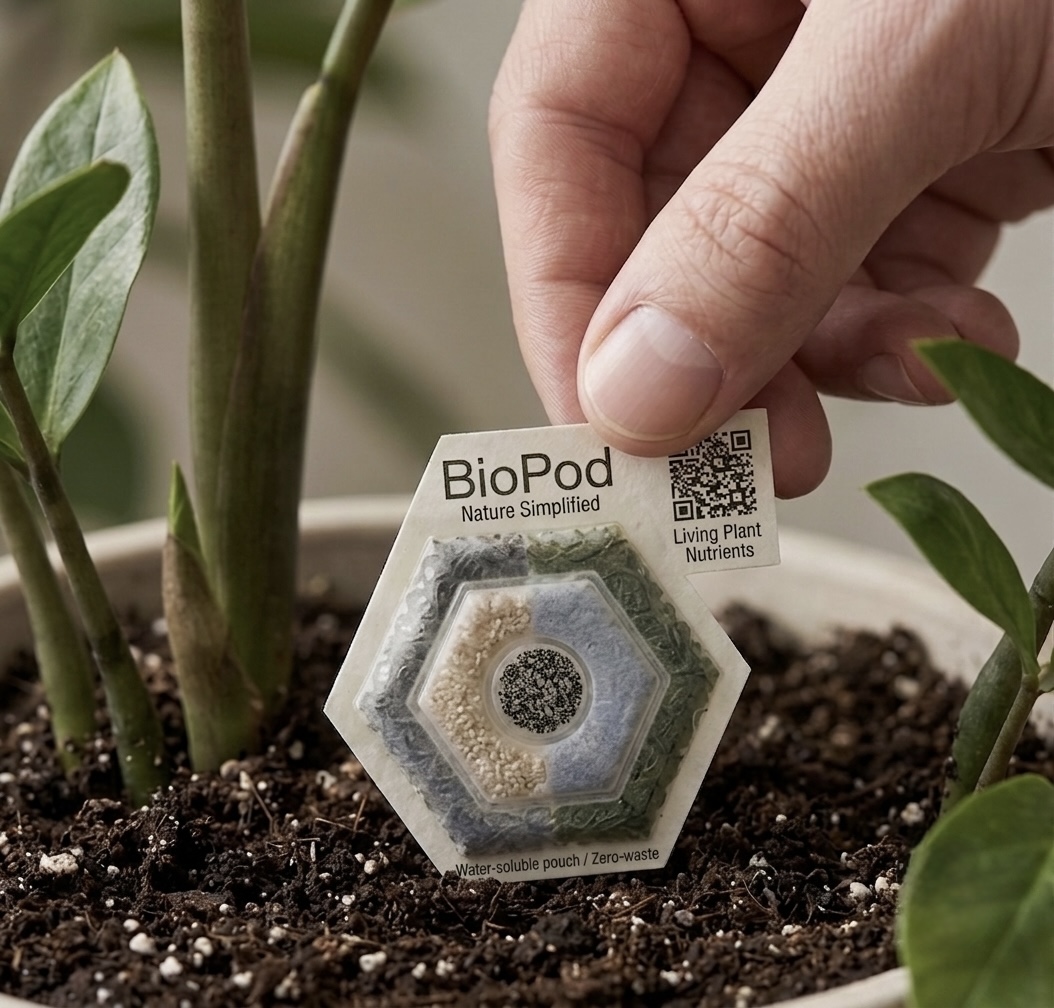
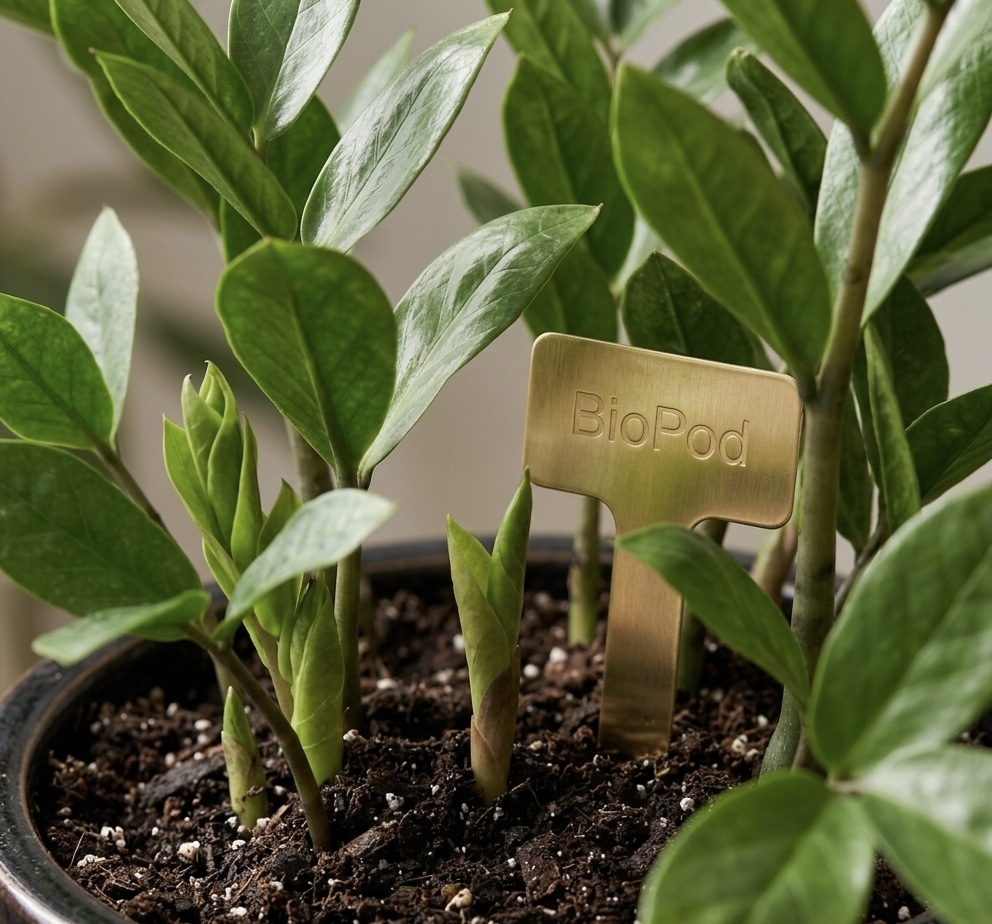
Drop one in.
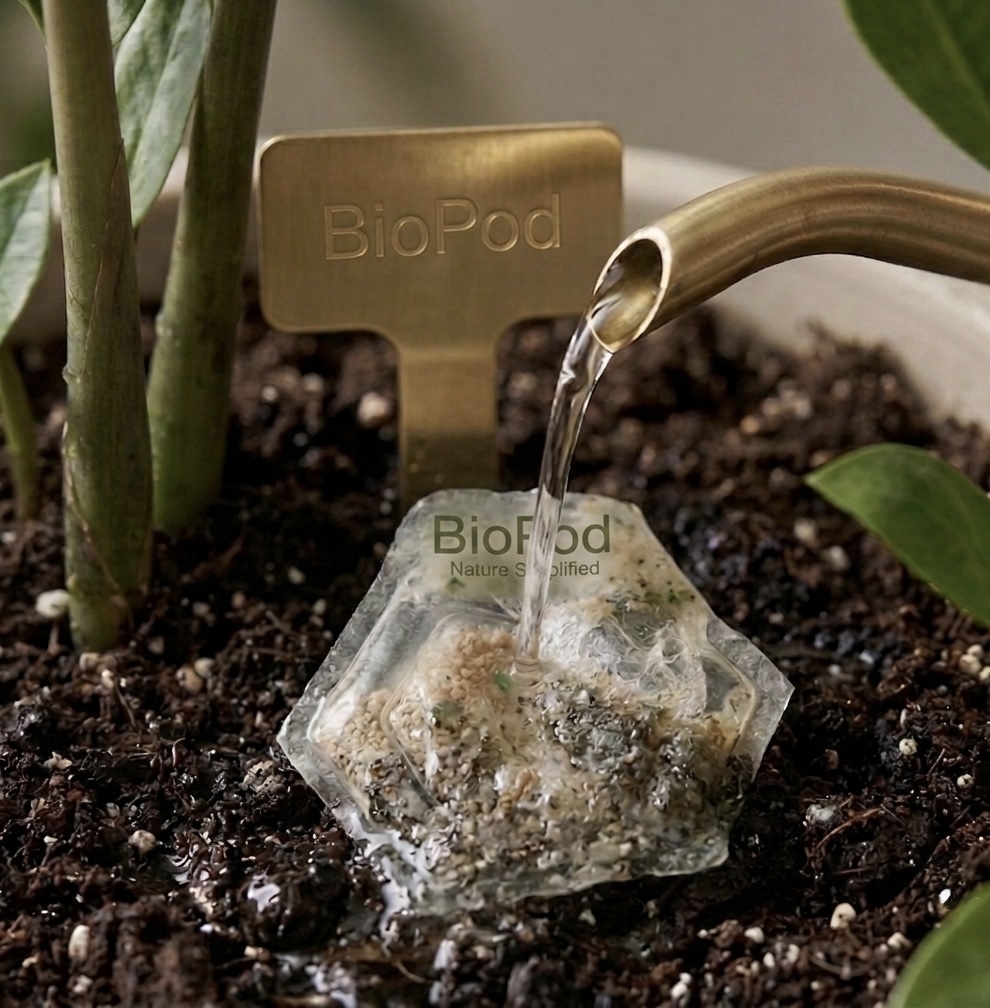
Water as normal.
Watch it grow.
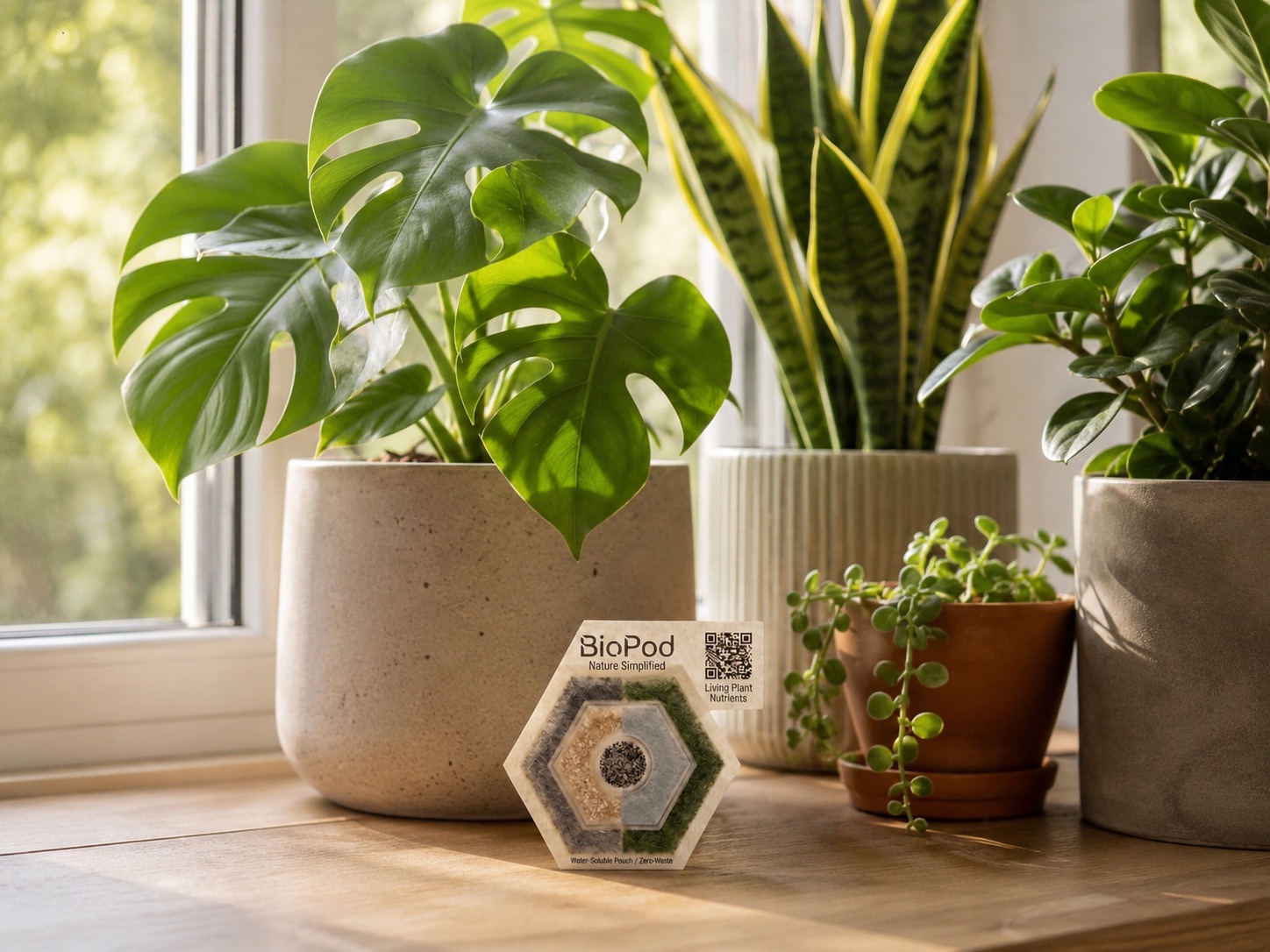
BioPod is pre-measured organic plant food in a water-soluble paper shell. Drop one in, water as normal. The shell dissolves in 30 to 90 seconds and feeds the root zone for 8 to 10 weeks. Houseplants, balcony pots, window boxes, ornamentals: one pod, everywhere you grow. No scooping, no mixing, no burn risk, no plastic.
The fertilizer aisle is a plastic aisle
Walk down any garden aisle. Plastic bottles of liquid. Plastic bags of granules. Plastic-coated beads that stay in the soil after the nutrients are gone. Feeding a plant should not work like this.
Measuring you can get wrong
Measuring cups, dosing caps, and ratios written for people managing acres. Get it wrong in a pot and you burn the roots. That fear is why so many plants never get fed at all.
Plastic that stays in your soil
Slow-release fertilizer works by wrapping every granule in a polymer coating. The nutrients leave. The coating does not. Researchers who sampled nineteen fields found coating fragments in every one.
Salts that shock, then vanish
Concentrated synthetic salts deliver a spike, then nothing, and feed the plant while doing nothing for the soil it lives in. They are also easy to over-apply, which is where salt crust and scorched tips come from.
One pod answers all three. Pre-measured so it cannot be over-applied, organic rather than synthetic salts, and wrapped in paper that dissolves into the soil. Read the full plastic story.
Three steps. No mess. No measuring.
Place a pod
Set one pre-measured BioPod at the base of your plant or just below the soil. The dose is already calibrated. There is nothing to scoop, weigh, or dilute.
Water as normal
Water the way you always do. The cellulose shell dissolves in 30 to 90 seconds on contact with water and carries a balanced nutrient blend straight to the root zone.
Watch it grow
Nutrients release gradually as the pod breaks down over 8 to 10 weeks, feeding both your plant and the living soil around it. No residue, no leftover plastic, nothing to remove.
One pod, everywhere you grow
BioPod is dosed by pot size, not by plant species. If it grows in soil, a pod can feed it.
Houseplants
An indoor pot is a closed world of a few cups of soil. A gradual release suits it.
Balcony and patio pots
Planters, railing boxes, and window boxes. Same pods, same dosing by pot size.
Window boxes and planters
Long containers hold more plants than soil. Space the pods along the length.
Ornamentals and blooms
Flowering plants in containers. Steady potassium for roots and blooms.
Growth, protection, and balance at the root zone
Feeds where roots actually are
The pod sits at the root zone and releases there, instead of washing across the surface. Nutrients arrive where the plant takes them up, which is the difference between feeding a plant and feeding a pot.
Supports the plant's own defences
Beneficial Bacillus cultures wake in the soil and colonise the root zone. These are among the most studied helpful soil bacteria in plant research, documented to prime a plant's natural defences, what scientists call induced systemic resistance.
Balanced, never an excess
Four compartments release in stages: fast minerals, slow organic nitrogen, potassium, and microbes. Balance over weeks rather than a spike and a crash, with no synthetic salts to build up as crust.
Gentle around the household
Made from plant and ocean ingredients with no synthetic fertilizers, so it is family and pet friendly when used as directed. As with any plant food, store it away from pets and children.
One pod, one full feeding
Dosed by pot size, not by plant species, so there is nothing to guess. About one pod per six inches of pot. A 12-pack is twelve pods, roughly a dollar each. One pod per feeding for a small pot, two or three for a larger one.
Builds the soil, not just the plant
Microbes keep working after the nutrients are used, cycling what is already in the soil and building structure. This is a soil-health system, not a quick green-up, and it compounds season after season.
A water-soluble shell and a living nutrient blend
BioPod starts with a cellulose shell made from FSC-sourced wood pulp fibers. It is the same plant fibre family as paper, fully biodegradable, and it dissolves in soil within 30 to 90 seconds when watered, leaving no residue.
Inside the shell is a balanced blend built on four natural pillars:
- Plant proteins for slow-release nitrogen and steady, gentle growth
- Sea kelp for trace minerals, natural growth compounds, and over 60 micronutrients
- Mineral potassium for strong roots, blooms, and visible greening
- Beneficial soil microbes that colonize the root zone, suppress root disease, and build long-term soil health
Each pillar is individually backed by published, peer-reviewed scientific literature. The combination and the multi-compartment delivery architecture are what make BioPod structurally different from anything else on the shelf.
The shell is not a plastic film, and it is not PVA, the synthetic polymer used in detergent pods. It is paper, and when it dissolves it leaves nutrients rather than fragments.
What you put in the pot, and what stays there
Every fertilizer on the shelf today was built for commercial growing, then repackaged for the home without rethinking the format. Here is how BioPod compares with the common product categories available today.
| BioPod | Synthetic granules | Liquid concentrates | Compressed spikes | |
|---|---|---|---|---|
| Works in pots, beds, and planters | ||||
| Organic inputs | Some | Some | ||
| Pre-measured, no scooping | ||||
| No measuring or mixing | Partial | |||
| No plastic left in the soil | ||||
| Zero burn risk at any dose | ||||
| Feeds soil microbes | Some | Some | ||
| Multi-compartment staged release |
Scroll the table sideways to compare.
Comparison reflects common product categories, not any single brand. Category traits drawn from public retailer listings.
Small pod. Real intent.
BioPod was founded by an environmental scientist who believes plant care should be simple and clean: organic inputs, a dose you cannot get wrong, and not a scrap of plastic left behind. We build for every plant a person grows, from a single shelf of pots to a whole balcony.
Source: Geyer et al., Science Advances. More on The Plastic Problem.
"I kept finding the same pattern: the convenient choice almost always carried a hidden trade-off. BioPod is my answer. Plant food that is simple, organic, and clean."
BioPod, briefly
Join the BioPod waitlist
Get launch news, early access, and growing tips delivered to your inbox. It takes twenty seconds, and there is no spam.