
The fertilizer that finally makes sense for indoors
86 million American households own indoor plants. Yet every fertilizer on the shelf was designed for commercial farms, lawns, and outdoor gardens. The measuring cups, the chemical ratios, the dusty bags, none of it was built for an apartment kitchen counter or a windowsill. BioPod was. Here is why indoor plants need a different approach, and how BioPod delivers it.
Limited soil, limited margin for error
An outdoor garden has cubic yards of soil to buffer mistakes. An indoor pot has a few cups. That changes everything about how feeding works.
Indoor plants live in a closed system. There is no rain to flush excess nutrients, no surrounding soil to absorb overflow, and no seasonal dormancy cycle to reset the chemistry. A single overapplication of synthetic fertilizer in a 6-inch pot can burn roots within hours because the salts have nowhere to go.
This is why so many plant owners tell us they are confused by fertilizer labels, which were written for people managing acres, not pots. And the number one fear is not underwatering or insufficient light. It is killing their plants through incorrect fertilizer application. BioPod eliminates that fear entirely. The pre-measured organic dose makes overfertilization physically impossible, even if you use two pods by accident.
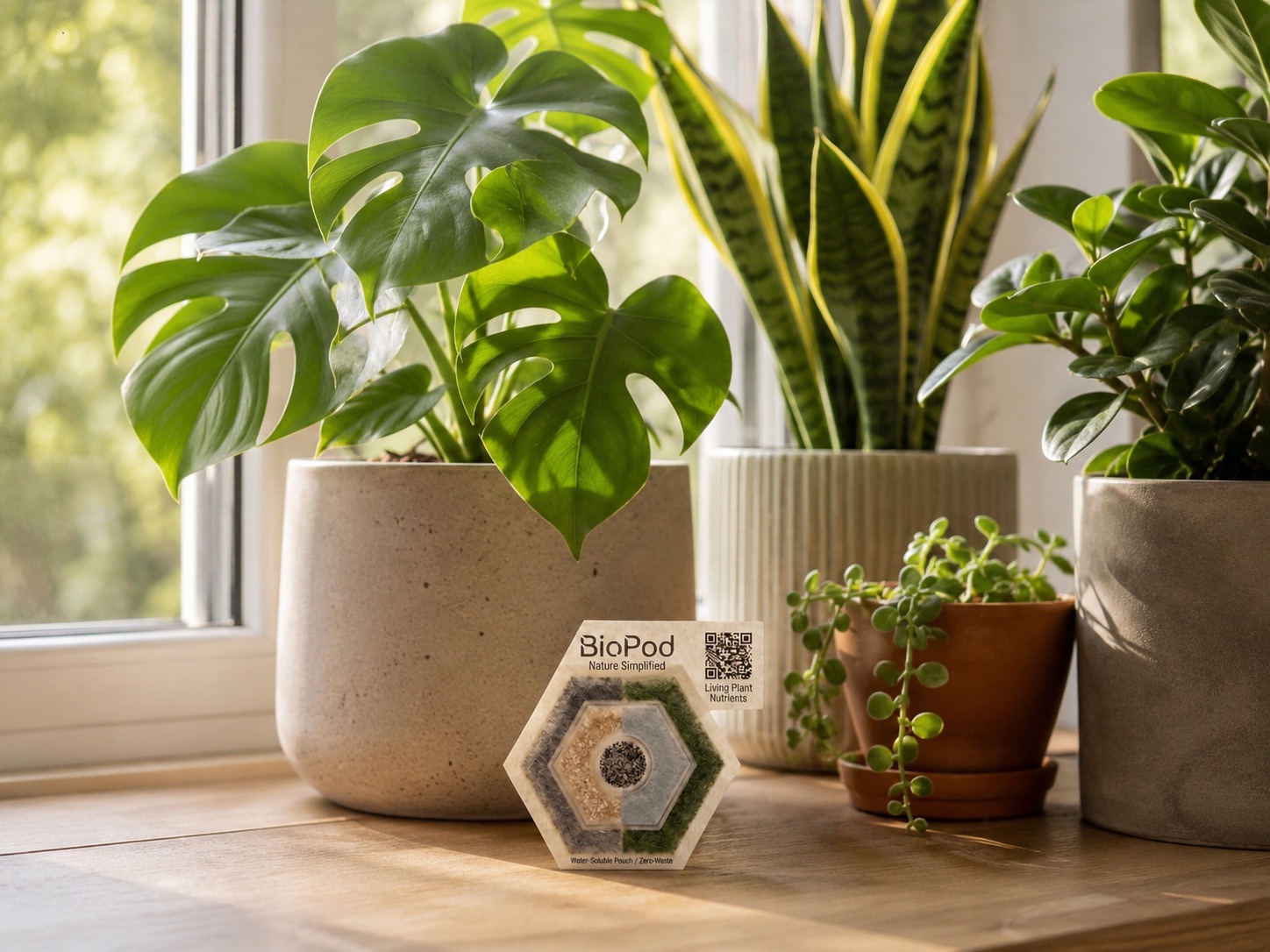
A simple guide for the plants you actually own
BioPod works with virtually all common indoor plants. Here is a general guide based on the 8 to 10 week pod cycle, with about one pod per six inches of pot diameter, all tracked for you in the Plant Care Portal.
| Plant | Light needs | Feeding notes |
|---|---|---|
| Pothos | Low to medium | One of the most forgiving houseplants. Responds well to steady, gentle nutrition. Avoid overfeeding with synthetic products. |
| Monstera | Medium to bright indirect | Heavy feeder during the growing season. Benefits from the slow-release nitrogen in BioPod. |
| Snake plant | Low to bright indirect | Very low nutrient needs. One pod per cycle is likely sufficient even for larger pots. |
| ZZ plant | Low to medium | Tolerates neglect but responds to consistent light feeding. Avoid synthetic concentrates that risk root burn. |
| Fiddle leaf fig | Bright indirect | Notoriously sensitive to overfeeding. BioPod's zero-burn-risk formulation is particularly well suited. |
| Peace lily | Low to medium | Moderate feeder. Benefits from the microbe-driven soil health BioPod builds over successive cycles. |
| Philodendron | Medium indirect | Steady grower that appreciates consistent nutrition without chemical spikes. |
Scroll the table sideways to see all columns.
This guide provides general feeding context. Every plant is different, so adjust for species, pot size, and season.
How to tell if your plant needs more, or less
Signs of underfeeding
- Slow or no new growth during the growing season
- Leaves smaller than expected, weak stems
- Pale or yellowing older leaves while newer leaves stay green
Signs of overfeeding
- Brown or crispy leaf tips and edges
- A white salt crust on the soil surface
- Wilting despite moist soil, rapid yellowing of many leaves
With a pre-measured organic pod, underfeeding is the only scenario you need to watch for, and the fix is simple: place another pod. Overfeeding is eliminated by design.
You are part of a market that has been overlooked
70% of millennials self-identify as plant parents. The indoor plant segment has grown significantly, driven by remote work, apartment living, and social media plant culture. U.S. foliage plants for indoor and patio use generate $928 million in annual sales.
Yet every product in the fertilizer aisle assumes its buyer owns a yard. BioPod is the first product built from the ground up for the way indoor plant owners actually live: small spaces, limited storage, no horticultural training, and a strong preference for products that just work without requiring research.
Sources: USDA Floriculture Census; National Gardening Survey.
Never miss a feeding
Track every plant and get a reminder when it is time to refeed, free in the Plant Care Portal.